Thursday, November 10, 2016

THE TRAGIC LIFE OF PROFESSOR F.M. SHIPPEY

Professor Francis M. Shippey moved to Algona 1884 to become principal of the Algona school system.  At 30 years of age, he would be leading a growing school district, receiving $80 per month salary.  This must have been a fairly generous salary as it was twice the amount most teachers in the district received.  By the end of October, his wife, Joyce, and their son, Claude, joined him in Algona and the family settled in to await the arrival of their second child.

Shippey appears to have been a good administrator.  He met regularly with the school board and made various recommendations such as dividing the primary department into two divisions to each attend one-half the time.  He dealt with employee issues, the purchase of various instructional books, and budget issues.  He also was an instructor at the Kossuth County Normal Institute for area teachers.  The school board was quite pleased with his performance and by March of 1885 they voted not only to renew his contract but also gave him a $20 per month raise beginning the next school year.

TRAGEDY STRIKES

The Shippey family were settling well into their new home.  In addition to four year old Claude, an infant daughter, Delta, had joined them in January.  By the time summer arrived, they were ready for an outing on the river.  Boats were available to the public on the south bank of the river above the mill.  The family chose a boat and settled in for a lovely early afternoon ride.  The professor paddled out into the river.  

An area known as “the washout” was located a few rods above the mill dam where several years earlier high water had made a new channel.  Although a dam had been constructed there, at times when water was high, as was the case on this day, water would forcefully rush over the dam, producing a strong draft several feet back into the pond. 

Unacquainted with the river, Mr. Shippey rowed nearly due north and came almost immediately to a point directly above the north dam.  His back was to the approaching danger.  Soon he was within about three feet of the dam and it was too late to avoid calamity.  When Mrs. Shippey realized what was about to happen, she stood up and jumped overboard, clutching her infant to her chest.  Their bodies disappeared into the foaming waters at the bottom of the dam.


The Tragic Life of Professor F.M. Shippey - kossuthhistorybuff.blogspot.com
Old Mill

Both Professor Shippey and Claude were thrown from the vessel as it passed over the dam.  Shippey resurfaced and began desperately searching for his family.  He swam until he was exhausted, finally drifting to a small island several rods below.  He was able to attract the attention of a farmer who was crossing the bridge.  Sounding the alarm at the mill, word was sent to town for more help and several mill workers rushed to the location.  Soon a crowd had gathered on the bridge overlooking the scene.

Despondent, Professor Shippey was taken to his home while a search of the waters was conducted.  A large number of men began dredging the river using every means possible to locate the bodies.  After several hours of searching, the body of Mrs. Shippey with little Delta still clasped tightly to her was found firmly wedged in between some rocks directly below the falls.  So tightly were they stuck that it took sometime before they could be brought to the surface.  A news report published in the July 1, 1885 edition of the Algona Republican states, “The bodies of the mother and babe were laid side by side in a platform wagon, their upturned faces wearing a natural and peaceful expression, the babe seeming to smile as sweetly as though sleeping in its cradle, and thus they were taken to the now desolate home, where the husband had preceded them.”  The body of Claude could not be located.  The search would go on for several weeks without reward.

The funeral service for Joyce and Delta Shippey was held at the family residence on Thursday, July 2nd.  A huge crowd attended, only a third of which were able to actually enter the house.  The room where the bodies lay in state was filled with flowers.  A large cross of white was placed at the head of the coffin and another lay tenderly on the bodies.  The sorrow that surely enveloped Francis Shippey must have been overwhelming.   

QUALIFICATIONS QUESTIONED

A controversy concerning Professor Shippey’s continued employment began to arise a few weeks later.  It seems that at some earlier point the local school board had passed a resolution requiring the principal of the school to secure a state certificate.  For unexplained reasons, Shippey did not attend the certification process in Fort Dodge.  The board then rescinded the resolution regarding certification as they had already entered into a contract with Shippey for the 1885-86 school term.  This met with some disfavor with the public.

Just a few weeks later an article entitled “About Prof. Shippey” appeared in the Upper Des Moines.  A letter from the superintendent of the Iowa Industrial School at Eldora was printed at the request of a school board member.  This school was a home for delinquent juveniles.  The correspondence addressed a question regarding possible dismissal of Professor Shippey as principal because he was once an inmate of the school.  The superintendent encouraged the board to make their judgment based on his success and failure rates while in their employ and not on circumstances of his youth which he had overcome. 

Given his recent devastating loss, I found the discontent swirling around Professor Shippey to be unexpected.  His employment was not terminated so there must have been some support for him in the community.  Reading between the lines, my impression is that he had offended a board member or two and they were searching for a way to remove him from his position.

SEEKING POLITICAL OFFICE

Shippey became quite active in politics which appears to have remained a lifelong interest.  That fall he was nominated for the position of county superintendent on the Democratic ticket.  His opponent was Ben Reed, well known in the area and a member of an early pioneer family. 

Several scathing editorials were written about his candidacy including one printed in the October 28, 1885 edition of the Upper Des Moines which states, “Shippey, besides being a stranger has not made any enviable record as an educator.  He is not popular in Algona and he will not receive his party vote where he is known.”  One must be careful about judging a person based on the opinions expressed in political editorials so it is hard to determine the true sentiments of the electorate.  Perhaps there was some truth to commentary, however, as Reed was victorious. 

CLAUDE IS FOUND

In mid-May, almost 11 months after the boating accident, Dr. A. F. Dailey and his wife were out for a row boat ride on a Sunday morning when he noticed a shoe lodged on a grape vine suspended several feet above the water.  Upon investigation, he found the shoe still contained a sock and the remains of a foot.  He summoned Marshal Tuttle and Dr. Garfield to the spot.  They found Claude’s badly decomposed body directly under the limb on which the shoe had been found.  Professor Shippey was able to identify the clothing and shoes as those of his son.  Although once more overcome with grief, he expressed his relief that the body had been recovered and could be buried next to the child’s mother and sister. 

With Claude’s body now laid to rest and his contract not renewed for the next year, the Professor moved on. 

SO WHAT HAPPENED TO PROFESSOR SHIPPEY?

Francis Shippey married Anna Seaman on March 6, 1887 in Van Wert, Ohio.  The family resided in Lansing, Iowa, for several years where Shippey served as principal.  That marriage produced two children, Ralph and Jessie, but ended in divorce. 

According to information on Find A Grave, the professor married for a third time in 1896 to a woman named Jessie.  The 1900 census shows them living in Waterloo with a daughter, Marion.  The professor’s two older children are listed as residents of their household.  By this time Shippey had become a school book salesman and traveled extensively.  A second daughter, Francis, was eventually added to the family.

Tragedy struck once again when Marion contracted spinal meningitis.  Given little hope of recovery by her physicians, the family turned to their belief in Christian Science but to no avail.   The patient succumbed to the illness at the age of nine years, six months and 23 days.
The Tragic Life of Professor F.M. Shippey - kossuthhistorybuff.blogspot.com
Shippey Family gravesite
in Riverview Cemetery in
Algona

The 1915 census lists F.M. Shippey as a general superintendent and finds him living in Des Moines at the Iowa Hotel.  Shippey died alone in Des Moines on February 4, 1925 after a long battle with liver cancer.  He was 70 years old.  Although survived by two daughters, a son and a brother, his body was unclaimed by relatives and so it was placed in a morgue in Des Moines.  Friends and former students raised the necessary funds for burial and his body was brought back to Algona where it was received by local Masons.  Though no record of him having been a member of the Masons while in Algona, a Masonic pin was found amongst his final belongings.  Ten local Masons attended the funeral as his only mourners.  Professor Francis M. Shippey was then interred next to the family members he tragically lost so long ago in the swirling waters of the Des Moines River.

Until next time,

KC History Buff


If you enjoyed this post, please don’t forget to “like” and SHARE to Facebook.  Not a Facebook user?  Sign up with your email address in the box on the right to have each post sent directly to you.


Be sure to visit the KCHB Facebook page for more interesting info about the history of Kossuth County, Iowa.

Wednesday, October 19, 2016

ALGONA'S UNITED STATES SENATOR

I am not sure how many local citizens are aware that Algona at one time could boast that it was the home of a United States Senator.  L.J. Dickinson was a local attorney who first served as a U.S. Congressman before being elected to the Senate in 1931.

LESTER J. DICKINSON

ALGONA'S UNITED STATES SENATOR - kossuthhistorybuff.blogspot.com
Son of Civil War veteran Levi Dickinson and his wife, Willemene, Lester J. “Dick” Dickinson was born October 29, 1873 in Derby, Iowa.  He was a hard worker, milking and doing other farm labor while growing up on the farm.   He clerked at a hardware store as a high school student before graduating from Danbury high school.  He continued to work odd jobs while earning his way through Cornell College at Mt. Vernon.  L.J. dropped out of college after his sophomore year to attend a business college in Des Moines where he took stenographic training.  He then returned to Cornell and became secretary to the college president while continuing his studies.  Graduating from Cornell in 1898, Dick received his law degree from the University of Iowa the following year.

The 26 year old brand new attorney came directly to Algona and formed a partnership with Timothy P. Harrington.  Getting their law practice established took some time.  Their first year in business they earned less than $200 so their office served as their sleeping quarters as well.  Dickinson enlisted in the National Guard in which he served as a Second Lieutenant in the 52nd Infantry between 1900 and 1902.

FAMILY LIFE

The new young lawyer must have created quite a stir among the eligible single women in the community.  Tall, broad-shouldered, good looking and friendly, it is likely that many hearts were atwitter when he walked into a room.  He only had eyes for one young maiden, however.  L.J. began to court Myrtle Call, the youngest daughter of Ambrose and Nancy Call. 

The two were united in marriage on August 21, 1901, in an 8:00 p.m. ceremony at the brightly illuminated Call home on Hall Street.  Rev. W. J. Suckow conducted the service before family and a few intimate friends with nieces Dorothy Hutchison and Florence Cowles serving as ribbon girls and nephew Donald Hutchison as flower bearer.  Unfortunately the day was not without incident.  Levi and Willemine, parents of the groom, were on their way to the ceremony from their home north of town in the middle of a thunderstorm.  It was raining heavily.  Their one horse carriage hit a bus while driving west on State Street, causing a wheel to come off their carriage.  They were thrown from the vehicle, sustaining only minor bruises and abrasions but leaving them unable to make it to the ceremony.

The following Tuesday, a lavish reception was held at the home of Gardner and Florence Cowles, the bride’s sister.  A large crowd attended this gathering including many of Dickinson’s fellow National Guard members.  It was said that the “spacious rooms were crowded by a throng of visitors” and that “elegant refreshments were served.”

In 1902, the young couple commenced the construction of a new home.  The lot chosen was just a block north of the Call family residence.  A seven room cottage with a stone foundation in a colonial style, it was outfitted with all the modern improvements of the time.  An article in the August 27, 1902 edition of the Upper Des Moines-Republican describes it as “one of the prettiest, best planned and most comfortable and convenient of the modern houses so far put up in our town.”  The beautiful home still stands at 308 South Hall Street.

ALGONA'S UNITED STATES SENATOR - kossuthhistorybuff.blogspot.com

ALGONA'S UNITED STATES SENATOR - kossuthhistorybuff.blogspot.com

POLITICAL CAREER

In addition to their busy law practice, both L.J. and his partner, Tim Harrington, were very active in local politics.  A staunch Republican, Dickinson became chairman of the county central committee in 1901.  He served as city clerk for Algona from 1900 to 1907 and then became county attorney from 1907 through 1913.  His involvement increased his exposure and he was beginning to establish a fine political reputation across the state.  Tim Harrington successfully ran for election in 1916 and served as a state legislator from 1917 to 1920.

ALGONA'S UNITED STATES SENATOR - kossuthhistorybuff.blogspot.com
Upper Des Moines
Republican
Feb. 13, 1918

In 1917, an opportunity presented itself and L.J. was ready.  He declared his candidacy for Congress from the 10th district when incumbent Frank P. Woods’ seat came up for election.  In 1918 World War I was slowing drawing to an end.  Congressman Woods, Dickinson’s opponent in the primary, did not have a voting record of supporting our military.  He voted against the resolution to declare that a state of war existed between Germany and the United States; failed to support legislation to increase the standing army; and failed to appropriate funds for naval support.  Dickinson campaigned hard on these issues and received many endorsements from district newspapers. 

The local area showed him unwavering support at the primary.  Even area Democrats cast their vote in his favor in hope of having a local man represent them in Washington.  Dickinson’s primary victory was the upset of the election and made headlines throughout Iowa.

Next up was his campaign against J. R. Files, the Democratic nominee for Congress.  Dickinson had a great affinity for and was a strong proponent of farming.  After tracing his roots back to 1630, he knew that he came from a long line of farmers. In fact, he discovered that he was the first generation not to farm.  His support of the agricultural sector put him in great favor as well as his support for funding for the war.

A local editorial published in the Kossuth County Advance on October 24, 1918, said, “He is a man of congressional size in all respects, and will, with his fine oratorical ability and clear-headed, patriotic statesmanship, give the grand old Tenth a reputation in the halls of Congress that will reflect credit on Kossuth County and its people.”

He defeated Files in the November election to become the U.S. Congressman from the 10th district of Iowa winning in every county except Carroll and Crawford, where he lost by only four votes.  He went on to serve six terms before running for Senate in 1930.  L.J. was a dark horse candidate for the office of vice president on the Republican ticket in 1924.

Dick defeated two primary opponents before winning the fall election against incumbent Daniel F. Steck by a margin of 50,000 votes.  During his tenure in the U.S. Senate, Senator Dickinson was an outspoken opponent of the New Deal.  Described as a “loud, earnest orator” he had been a keynote speaker at the 1932 Republican national convention calling for “sane, honest, industrial and agricultural programs” and a return “to the ideas of our New England forefathers.” At the 1936 Republican national convention, the Senator was once again a dark-horse candidate, this time for the presidency.  It would go to Alfred Landon who was defeated by FDR.

Dickinson’s opposition of the New Deal worked against him in the 1936 senatorial election and he lost in a narrow margin in a Democratic landslide across the nation, ending his senate career after one term.  (In 2016, his seat is held by Senator Joni Ernst).  He and Myrtle moved back to Iowa, living a short time in Algona.  They then settled in the Des Moines area where their children, L. Call Dickinson and Ruth Daugherty, lived.  Following in his father’s footsteps, Call had become a lawyer and had a successful practice.  L.J. joined the same firm.

PASSING OF AN ERA

Myrtle Call Dickinson suffered a cerebral hemorrhage in December of 1955 after which she was bedridden until her passing on September 8, 1956.  She was the last surviving member of the Ambrose and Nancy Call children.  Her body was returned to Algona for burial at Riverview Cemetery.

The Senator went on to survive his wife by almost 12 years, dying on June 4, 1968.  He fell several weeks before breaking his hip which, at the age of 94, proved too much for him to endure.  He was buried next to his wife.

It is said that Dickinson always maintained a connection with Algona, coming back here to live when Congress or the Senate was not in session.  He was also proud of his agricultural roots, always trying to do what was best for farmers.  He chose not to take public appointments after he left office, opting instead to re-enter the private sector where he went on to practice law for many years.  His legacy lives on in the Dickinson Law Firm in Des Moines, one of the largest—if not the largest—attorney firms in the state of Iowa. 

Until next time,

Jean
 

If you enjoyed this post, please don’t forget to “like” and SHARE to Facebook.  Not a Facebook user?  Sign up with your email address in the box on the right to have each post sent directly to you.

Be sure to visit the KCHB Facebook page for more interesting info about the history of Kossuth County, Iowa.


Reminder:  The posts on Kossuth County History Buff are ©2015-16 by Jean Kramer.  Please use the FB “share” feature instead of cutting/pasting.

Thursday, September 29, 2016

ALGONA HARP ORCHESTRA

Old news clippings may be my Achilles heel.  When I come across a stack of them, I just can’t resist thumbing through them in the hope that I will come across something that I haven’t seen before or that sheds light on a subject that interests me.  I happened upon one that did just that recently.  It was all about the Algona Harp Orchestra.  I had read about the orchestra playing at the opening of the Durdall Hotel in 1900, but had no idea of its history until this clipping came to light.  It reignited the spark to find out more about them.

Algona Harp Orchestra - kossuthistorybuff.blogspot.com
Pat Cady, August Sterzbach, Fritz Granzow,
Mart McCall and Joe Powers

THE FORMATION OF THE ORCHESTRA
Although it is not quite clear exactly when the Algona Harp Orchestra was organized, by 1896 it was managed by August Sterzbach.  By day Sterzbach was a butter maker at the Algona creamery, but was a violinist with the group.  The harp was played by Mart McCall who was a registered pharmacist and worked at Ehlers Drug Store.  Other members included G. W. “Pat” Cady on cornet, Fritz Granzow on clarinet and another unidentified member on bass. 

The orchestra had a steady following.  They had to have an extensive repertoire of musical selections as they played at a wide variety of occasions.  The group played on a traveling “circuit.”  Travel was by train and their circuit covered a large area.  In addition to Algona, they played at all of the smaller communities in the county and cities outside the county as far away as Hampton and Ceylon, Minnesota. 

PERFORMING

No occasion was too big or too small for the ensemble.  They became a staple at
Algona Harp Orchestra - kossuthhistorybuff.blogspot.com
Algona Courier, October 15, 1909
store openings or holiday celebrations, special events such as the Chrysanthemum Show put on by the W.C.T.U. each November, and private parties held in local homes.  They played at the grand opening of the Durdall Hotel in 1900.  Each Thanksgiving they would furnish the music for the grand military ball held at the armory hall.  The New Year’s Eve ball was also a big community event each year at which they shared their music.

Members of the orchestra changed from time to time.  A violinist by the name of Joe Powers played with the group for a period of time.  He lived at the Durdall Hotel and the orchestra would perform at Sunday dinners at the hotel to pay for his room and board.

They often played during various stage productions presented at the Call Opera House.  The entertainment at the theatre would range from Shakesperian plays such as Othello to comedies and the harp orchestra had to be able to play whatever music was necessary for the occasion.  When playing at the Call, the group would sometimes expand to include one or more of the following:  John Scott, violin; Kate Smith, violin; Oscar Johnson, violin; Charles Nicoulin, clarinet; Moore Smith, cornet; Glen Brunson, Euphonium; Mr. Jones, cello; Mr. Kyle, French horn; Prof. Benjamin, piano; and Frank Ostrum, drums. 

Algona Harp Orchestra - kossuthhistorybuff.blogspot.com
Back:  Hugh R. Smith, euphonium; and Mart McCall, harp
Front:  Moore Smith, cornet; John Scott violin; Chas. Nicoulin, clarinet
Algona Advance, January 19, 1905

Dance clubs were popular at the time and most communities formed one.  The Algona version was called the Ideal Dance Club and many well-known citizens were members.  They had regular gatherings, but on several occasions each year a very special event was held.  On one occasion in February of 1904, the Algona Harp Orchestra was the musical entertainment at a Ladies’ Masque Ball in honor of Valentine’s Day held in the ballroom of the Durdall Hotel on the west end of State Street in Algona.  The grand march began at 8:30 in the evening. Over 100 people were in attendance, all clad in a variety of costumes.  Spanish girls, Indian maidens, Little Red Riding Hood, Japanese ladies, and the Queen of Spades were in attendance as well as Uncle Sam, police officers, clowns and dominos.  The crowd danced to the strains of the music offered by the Algona Harp Orchestra in the beautifully decorated ballroom until the unmasking at 10:30 p.m.  A luncheon of sandwiches, coffee, cake and ice cream followed.  Many of the more notable names in the community were members of the club – Mr. and Mrs. J. T. Chrischilles, Col. and Mrs. Robert Spencer, Mr. and Mrs. W. C. Dewel, Dr. and Mrs. Sheetz, and many others.

Several times a year the group would present a sacred concert at a local church, usually the Congregational Church or the Methodist Church.  Often they would join their talents with the church choir and organ.

THE MUSIC ENDS

Members came and went.  Although the group usually consisted of five musicians, at times it would be as few as three.  The orchestra would reorganize several times through the years and others who also shared their talents with the group were Edith Bowyer Whiften, Charles Crammond, Hugh Smith, Glen Brunson and Durwood Walker. By the early 1920s, the ensemble had disbanded for the last time and the Algona Harp Orchestra was no more.

The orchestra brought a lot of enjoyment to the area during its existence.  From the most relaxed events such as a barn dance to black tie affairs at the Call Opera House, the ensemble managed to entertain audiences far and wide.  As an article published in the Algona Advance on January 19. 1905, stated, “The orchestra have a fine repertoire of music and are constantly receiving all the late popular pieces as fast as they are published.  Our citizens are, and should be, proud that Algona possesses a musical organization of such rare merit.”

Until next time,

Jean


If you enjoyed this post, please don’t forget to “like” and SHARE to Facebook.  Not a Facebook user?  Sign up with your email address in the box on the right to have each post sent directly to you.

Be sure to visit the KCHB Facebook page for more interesting info about the history of Kossuth County, Iowa.

Reminder:  The posts on Kossuth County History Buff are ©2015-16 by Jean Kramer.  Please use the FB “share” feature instead of cutting/pasting.


Thursday, September 15, 2016

LINCOLN SINGLETON, KOSSUTH COUNTY'S FIRST BLACK RESIDENT

Does the name Link Singleton mean anything to you?  It didn’t to me either until a post was made on the Kossuth County Historical Society’s Facebook page which talked about a black man by that name who had settled in Kossuth County not long after the Civil War.  Of course my interest was piqued and so I pulled up his obituary which began with the headline, “Beloved Negro Passes Away.”  His story began many miles from here. . . 


WHO WAS LINCOLN SINGLETON?

Lincoln Singleton was born in Alabama in 1856 to slave parents.  They were owned by a railroad company and so they moved from place to place, taking Link with them.  They both died when he was quite young.  He and his younger sister were taken in by an aunt who was a cook in the railroad camp.  Although just a boy himself, Link too was owned by the railroad and worked caring for animals and doing other jobs assigned to him. 

The Civil War was raging at this time and news came to the railroad camp that a squad of Yankee soldiers were on their way.  To protect their horses, mules and other provisions from the enemy, they were immediately gathered up and moved deep into thick woods in the hope they would not be found.  Link was left with three white men to tend to the animals.  Armed with shotguns, the men boasted about what they would do to any Yankees that appeared.  When a portion of the Tenth Missouri Cavalry burst into their fortress, one of the men immediately took off running.  Ignoring cries to halt, he was killed in a barrage of bullets. 

Soldiers surrounded the two other white men and questioned them about their allegiance to the cause.  When they had finished with the rebels, they turned to Link who thought his time had come.  He was but a boy of 8 or 9 years.  When asked if he knew where the horses and mules were located, he pointed to the ravine where they had been left to graze along with the other supplies.  As he led them to the site, he heard one of them say, “If this little black devil is lying to us we will kill him.”  Fear gripped the lad, but he had no choice but to keep moving.  Once the Union soldiers had pillaged all of the capable horses and mules and carried off the provisions, they burned the rest.  They were fearful that Link would be killed by the Confederates for giving them information so they asked him to go with them.  Though desiring to remain at home but fearful of refusing, he consented to go with them. 

A soldier did explain to Link’s aunt the danger he was in for cooperating with them and so she consented to let him go.  Their last moments together were heartbreaking as the weeping of his aunt and little sister touched him deeply.  He never saw either of them again.

The cavalry placed Link on a horse and instructed him to follow the forced march.  When darkness settled, exhaustion set in and Link lost control of his horse.  It wandered off the road and when Link awoke, he found himself among strangers.  They were the Fourth Iowa Cavalry.  The frightened boy burst into tears.  A kindly soldier by the name of Peabody came to comfort him.  When it was discovered that his home was too far away to return him that night, Peabody gave him some hard tack and meat and fixed a place for him to spend the night.  Link ate his food and then cried himself to sleep. 

COMING TO KOSSUTH COUNTY

Instead of returning home, the boy stayed with Mr. Peabody and at the close of the war accompanied him to Kossuth County where they settled on a farm in Riverdale township.  Link received good care and went to school.  When Mr. Peabody decided to move to California a year later, Link went to live with the Addison Fisher family with whom he stayed the next two.  He then spent the next twelve years in the home of Thomas Robison, just south of Irvington.  Link proved himself to be a truthful and well behaved boy.  He became a great favorite both at country school and at singing school held in the old Irvington town hall.  He especially loved and respected Mr. Robison who had cared for him and treated him so kindly.

Singleton was a talented runner and, when he moved to Algona in the early 1880s, he took on many competitors and became the area champion.  A local man, Lee Horning, was his “promoter” and won considerable money on the events. 

Link’s racing career came to an end after a deceitful scheme to embarrass him and to cheat Horning out of some of his winnings.  A match was arranged between the local hero and a “ragged stable boy” from Emmetsburg.  It was to be run on Diagonal Street.  When the day of the race arrived, Link was discouraged to see the “ragged stable boy” wearing spiked racing shoes and professional tights which displayed the muscles of a trained athlete. Following his defeat, Link never raced again.

Link was always well liked by everyone.  As a young man he began to take care of horses for different owners.  He served as a stable boy for A. D. Clarke and the Wadsworth brothers, prominent citizens of Algona. 

 
MARRIAGE AND SINGLETON HILL

At the ripe old age of 40, Link took a bride.  He was married to a colored lady, Miss Fannie McQuiddy of Emmetsburg, on November 18, 1896.  She had been employed by Col. and Mrs. E. S. Ormsby as a servant for a number of years and was highly respected in the community.  The couple were soon happily settled into a house built by Link on land he owned just south of the fairgrounds in an area which would become known as Singleton Hill.

Singleton Hill

The couple were never able to have children of their own.  They adopted a son named Harold.  Although the Singletons were well liked, it was difficult for their son growing up here.  Teased and ridiculed, he became frustrated with pent up anger.  He began to get into trouble and ended up dropping out of school.  At the age of 19 while working for S. H. McNutt carrying for his horses, Harold used a sharp stick to puncture the intestines of two of the animals causing their death.  He was later sent to prison for the incident, much to the sadness of his parents.

The Singletons were dedicated members of the Baptist Church, with Fannie
Baptist Church
especially active in their women’s group.  Their farm was quite versatile as were many of the farms of that day.  They raised chickens and sold eggs, had a few head of cattle and some hogs.  Link was locally known as an animal expert.  He regularly won awards at the county fair for his livestock. 
 

WELL-RESPECTED CITIZENS GONE

In the spring of 1918, Link’s health began to fail.  No one was able to determine the source of the problem and he died on June 26.  A postmortem examination discovered an abscess of the liver.  His funeral was held at the Baptist Church in Algona and was largely attended.  During his eulogy, Rev. J. W. Jeffries recounted the story of the small boy who rose from slavery to become a free man who owned land and made his own way.

Shortly after Link’s passing, Fannie obtained a job as a housekeeper for Mr. and Mrs. Lawrence C. Jones in Piney Woods, Mississippi.  Mr. Jones was the founder of Piney Woods Country Life School for the higher education of the Negro race.  Fannie had been a long-time supporter of the school.  Three hundred men and women of color attended the facility. Besides a literary education, the institution offered classes in industrial areas such as farming, blacksmithing, weaving, wheelwrighting, broom-making, and millinery among others.  In addition to her housekeeping duties, Fannie baked the bread and headed up the poultry department.  

A group of singers called the “Cotton Blossoms” toured to promote the school.  Through the efforts of Fannie Singleton, they performed here in Algona several times raising much needed funds.  Mrs. Singleton visited Algona frequently through the years and loved to receive news from the area.

After suffering a stroke, Fannie’s health gradually declined.  She passed from this life in her sleep on October 19, 1940, and was buried in the Piney Woods Cemetery, many miles from her husband who rests in Riverview Cemetery here in Algona.  Link lies next to his white neighbors, a sign of real acceptance at the time.

Unfortunately I have been unable to locate any confirmed photos of Lincoln Singleton.  It would be wonderful to find one to preserve his important place in Kossuth County history.  Link’s story is one of both luck and hard work.  He was forever devoted to the officers and soldiers of Co. L of the 4th Iowa Cavalry and frequently received letters from them.  He never forgot the kindness they showed to him. A hardworking person who made the most of opportunities as they came along, he was always proud to have been known as Kossuth County’s first Negro resident.


A PERSONAL NOTE

It is hard to believe, but it has been one year since I set up the Kossuth County History Buff site and started publishing historical posts.  I had set a personal goal of publishing an article every week for one full year which I have achieved. However, in addition to being an amateur writer, I am also a farm wife, mother, grandmother, volunteer and full-time employee.  Harvest is approaching and everyday life is calling my name.   Although I intend to keep writing historical articles, at least for now they will no longer be published weekly.  I have been so touched by all the comments and compliments I have received over the past year that I want to thank all of you who take your precious time to read the stories that I post. I hope you enjoy reading them as much as I enjoy researching and writing them.

I have lots of stories yet that I want to share, so keep an eye on your Facebook feed for future posts or, if you want to be sure you do not miss a single one, go to kossuthhistorybuff.blogspot.com and sign up to have the posts sent directly to your email address.  


Until next time,

KC History Buff


If you enjoyed this post, please don’t forget to “like” and SHARE to Facebook.  Not a Facebook user?  Sign up with your email address in the box on the right to have each post sent directly to you.

Be sure to visit the KCHB Facebook page for more interesting info about the history of Kossuth County, Iowa.


Reminder:  The posts on Kossuth County History Buff are ©2015-16 by Jean Kramer.  Please use the FB “share” feature instead of cutting/pasting.

Thursday, September 8, 2016

B.F. REED'S COMMENTS ON TWO EARLY SETTLERS

The original Kossuth County Historical Society was founded in 1909.  Each year at their annual meetings it became tradition to present papers written by pioneers setting out memories of the “early days”.”  Over the years many topics were covered in an effort to record county history.

Benjamin F. Reed was serving as president of the association in December of 1911.  I was thrilled recently when I discovered the remarks he made at that year’s annual meeting in his own handwriting.  To think they had survived 105 years!  The subjects of his comments, J. E. Blackford and J. R. Armstrong, had both passed away during the previous year and he took the time to remember them.  I think you will enjoy his remarks as much as I did.


B.F. REED’S COMMENTS ON TWO EARLY SETTLERS
J.E. BLACKFORD 1855
J.R. ARMSTRONG 1857

As the narration of events pertaining to the career of the early settlers, who have passed away, has its appropriate place on the program of each annual meeting, I shall confine my remarks to events with which the names of two of those who were residents before the war are associated.  J.E. Blackford became
B.F REED'S COMMENTS ON TWO EARLY SETTLERS - kossuthhistorybuff.blogspot.com
a pioneer of the county in the fall of 1855.  One event with which his name is associated occurred during the fall of 1864 when the citizens were collecting supplies for the relief of the sick and wounded soldiers, in their endeavor to capture the prize flag offered by the Sanitary commission to the county contributing the greatest amount in proportion to its population.  There existed that year an organization in Algona called the Students’ Club that became enthusiastic in the cause.  This club gave an entertainment in the old town hall in Irvington to help raise the necessary funds.  The hall was packed with a sympathizing audience, quite a number of people being from Algona.  I well remember that the club opened the entertainment by singing the Star Spangled Banner.  I remember also that Jane Henderson (Chapin) stood on the last end of the line.  Lizzie McCoy posed as the Goddess of Liberty and Ed Blackford delivered an oration, making gestures to make his effort more forceful.  The idea of a boy without whiskers making gestures was a stunner to the Irvington young people who had never seen the like before.  This is about all that I remember of the program.  The event of the evening, however, that impressed me, so that it is still fresh in my memory, was the patriotic address delivered by J. E. Blackford, preceding the entertainment.  With his commanding presence and deliberate speech he appealed to his audience with intense feeling to continue the work with renewed energy.  He pictured the scenes of the fallen after the battle and the condition of the wounded in the badly equipped army hospitals.  I often heard him speak on other occasions, in after years, but never with such eloquence as on that occasion.

B.F REED'S COMMENTS ON TWO EARLY SETTLERS - kossuthhistorybuff.blogspot.com
J. R. Armstrong came to Irvington in the fall of 1857.  Those of you who only knew him during the last twenty years of his life knew a very different man from the Dr. Armstrong of thirty years previous.  During those years he too was on orator of great force on great occasions.  One evening in April 1865 while Rev. William Leggett of the Baptist church was orating on the death of Lincoln in the old town hall in Algona with an eloquence that no one else in town at that time could equal.  Dr. Armstrong in the old hall in Irvington was orating on the same subject with such emotion that it caused the sturdy old pioneers to weep like children.  The event was the oratorical triumph of his life.  That peculiar power known as eloquence most certainly was in evidence on that April evening.  According to Daniel Webster’s own definition that it must exist in the subject, in the man and in the occasion, the three elements of eloquence were there confirmed.  The speaker was a fine classical scholar in the very vigor of noble manhood; the subject, Lincoln, at that time was the principal topic of conversation throughout the entire nation; and the occasion was the assembling of old settlers in reverential respect for the great martyr whom they had learned to almost worship as an idol.  Great as was Dr. Armstrong’s success along many lines of enterprise, his career as a teacher was the most wonderful of all.  Let me give you a brief sample of his Ridge school; a six months’ continuous term, six days in the week, six and one half hours per day, half hour at noon, no recess and no leaving of seats for any cause except for recitation; a term where boys fourteen years old who had never seen an arithmetic before not only mastered Ray’s third part but were familiar with the elements of algebra and geometry as well; a term where every pupil became as well acquainted with the Greek alphabet and Latin language in counting as they were with the English; a term where astronomy, geology and even meteorology were taught; and a term when for miles around there were no social functions whatever attended by any of the pupils.  How thorough was all this teaching?  Let me give one illustration:  One stormy night Dr. Armstrong did not go home but staid at the home of my parents.  After supper my brother James, eight years old, lay sleeping on the floor behind the stove.  The Doctor picked him up, stood him on his feet and said “wake up and show your father how far you can recite in your geography before making a mistake.”  The questions in lesson after lesson were flung at the boy with great speed.  On and on they went till over thirty lessons had been recited before the eight year old boy went down on the question, “What can you say of the climate of the West Indies?”  The book answer was “mild and delightful” but the lad answered “warm and delightful.”  The most wonderful feature of that school, in the winter of 1860-61, was the strenuous studiousness of the pupils not only at school, but at home and one the road to school.  For this effective service Dr. Armstrong received the magnificent sum of $30 per month, boarded himself and rode two and one half miles twice each day.  He taught six other terms, all on much the same order, getting I think not over $20 per month for any of them.

If I were posing as the only living witness of these schools I should not expect any of you to believe one fourth of what I have claimed as merit for Dr. Armstrong; but fortunately for my reputation as to truth and veracity there are others who are able to explain to you in detail.  Ask Walter Raney, Geo. Fisher, Brint Robison of Irvington.  Write to Walter C. Shaw, Mayor of Harriman, Tenn., Robert Wright of Portland or Thomas J. Clark of New Carlisle, Indiana and others whom I can easily name. To satisfy your curiosity I shall close by saying that neither Dr. Armstrong nor any other person could have conducted such schools on any spot of God’s green earth but in old Irvington township.  To tell why I should be compelled to delineate the character of every man at that Time in said township, but time forbids.


B.F. Reed


We are lucky that Ben Reed was so dedicated to preserving the history of our early years. 

Until next time,

KC History Buff

If you enjoyed this post, please don’t forget to “like” and SHARE to Facebook.  Not a Facebook user?  Sign up with your email address in the box on the right to have each post sent directly to you.

Be sure to visit the KCHB Facebook page for more interesting info about the history of Kossuth County, Iowa.

Reminder:  The posts on Kossuth County History Buff are ©2015-16 by Jean Kramer.  Please use the FB “share” feature instead of cutting/pasting.

Thursday, September 1, 2016

STARLITE DRIVE-IN THEATRE

While watching fireworks on Independence Day this year, my mind turned to other times, other celebrations of our country’s birthday.  Although I have watched them in many places in our county including the fairgrounds, Wesley, and West Bend, the place that suddenly popped into my head was the Starlite Drive-In Theatre.  A movie and fireworks—what could be better?

THE BIRTH OF THE STARLITE

Located two miles east of Algona right off of Highway 18, the Drive-In drew
STARLITE DRIVE-IN THEATRE - kossuthhistorybuff.blogspot.com
Algona Upper Des Moines
June 2, 1949
patrons from a wide area.  The giant screen was located in the southeast corner of the site.  Long rows of parking spaces faced the screen with rises in the ground for the front tires to rest on for ease of viewing by the occupants of the vehicles.  Sound was provided by a speaker that hooked on to the window. 

The projection booth also served as the refreshment stand.  Most regular theatre food could be purchased there—popcorn, candy, soft drinks—as well as hot dogs and hamburgers.  In later years pizza was added to the menu.

The Starlite officially opened on June 10, 1949.  The grand opening featured the film “Drums Along The Mohawk” starring Claudette Colbert and Henry Fonda.  Admission was 50¢ for adults with no charge for “children or car.”

The first season ended on October 28th of that year.  Attendance had exceeded management’s expectations and they were looking forward to the next year.  However, shortly after the start of the 1950 season, a storm with gale winds up to 75 miles per hour moved through Kossuth County taking down the screen.  Two weeks later it was back up, freshly painted, with heavier supports and more cable added. 

Each year the outdoor theatre would open around the 1st of April and would run through the end of October, weather permitting.  The showing of the first movie would begin earlier in the spring and fall, with the starting times changing depending on the time of sunset.  Once a week “buck nights” were popular with many and kept the theatre busy on week nights.  Often local businesses would sponsor free admission which was always a big draw.

STARLITE DRIVE-IN THEATRE - kossuthhistorybuff.blogspot.com
Algona Upper Des Moines
August 5, 1968
Mom and dad had a large family and each dollar had to stretch in those days so going to the movies was a special event in our house when I was growing up. We would occasionally go if the movie was something we had been dying to see, but most often took advantage of free admission events.  For many years, KLGA was one of those sponsors and in addition to providing free admission, they would also hand out 45 rpm records.  Every person in the car would receive a record while supplies lasted.  What a treat that was!  We would listen to those records for days afterward.

Our family did not frequent the refreshment stand very often.  Instead mom would pop a large container of popcorn and on the way out to the drive-in, we would swing through the A & W and fill our gallon jug with ice cold root beer.  Snuggled in the back seat in our pajamas munching popcorn and drinking A & W root beer—life just doesn’t get much better than that.  Of course, Mom had the back of the station wagon filled with pillows and blankets and, if we didn’t fall asleep in the back seat during the movie, we could crawl in the back whenever we wanted and drift off to dreamland while mom and dad stayed to watch the adult feature which followed the family film that kicked off the night.

DANGEROUS TIMES

Through the years the staff had to deal with various forms of theft and vandalism.  There were always those who tried to sneak in without paying.  (Tell me you never considered a trip through the gates in the trunk or perhaps under a blanket on the floor of the back seat).  Those were the minor infractions though.  On several occasions burglars broke into the concession stand and stole cigarettes or other merchandise. 

A much more dangerous crime occurred on April 5, 1956 when an armed robbery took place during a Thursday evening free gate event.  Earlier in the day two men from Fort Dodge, Carl D. Clymer, 25, and Anthony J. Rodgers, 31, drove to Algona and parked in the vicinity of Bryant School.  They then stole a car which they used to drive to the Starlite.  Using sawed off shotguns and wearing disguises, they walked into the crowded concession stand.  They held 14 persons at bay while they demanded all of the money in the register.  Manager R. M. Phillips and his assistant, Virgil Rohlf, quickly tossed all of the funds available—$165—into a couple of bank bags which were handed over to the robbers.  The two left without causing any physical injuries. 

An extensive manhunt was immediately launched by Sheriff Ralph Lindhorst upon the report of the robbery.  Roadblocks were set up on all main highways out of town and cars were searched.  Meanwhile, the two assailants made it back to Algona.  They wandered aimlessly for a period of time trying to remember where they had parked their car.  It was during this time that one of their guns accidently discharged near the European Hotel.  Manager Firman Laing went to investigate the sound and actually talked to the two strangers.  Shortly thereafter, the men found their car.  They evaded roadblocks by following only country roads back to Fort Dodge.  Clymer even took the time to call in to his employer, National Gypsum Co., and told them he would be late to work due to a flat tire.

Based on witness statements and working with the authorities in Fort Dodge, the investigation led directly to these two suspects.  Five days after the robbery they were taken into custody.  Under questioning by Sheriff Lindhorst and County Attorney Louis Nitchals, the two confessed.  They had come to Algona to steal money to finance legal fees for Clymer who had been charged with illegal possession of firearms.  Clymer had quite a rap sheet.  He had previously been arrested for attempting to rob the cashier at the Hilltop Drive-In theatre in Fort Dodge.  He had also participated in an armed robbery of a grocery store in Fort Dodge.  His involvement in the robbery of the drive-in in Fort Dodge led the authorities to take a closer look.  Rodgers was suspected due to his close involvement with Clymer.  (I guess Mom was right when she used to say, “Birds of a feather flock together!”)  He had a long criminal history as well and had spent five years in prison for auto theft.

Charges of robbery with aggravation and larceny of a motor vehicle were filed against the two.  Justice moved very swiftly.  They both entered pleas of guilty on April 12th and were sentenced to 25 years in prison.  Only $18 was ever recovered from the stolen funds.

HAPPIER TIMES

STARLITE DRIVE-IN THEATRE - kossuthhistorybuff.blogspot.com
Kossuth County Advance
July 1, 1954
Many special promotional events were held at the Drive-In location through the years—everything from Easter egg hunts, to distributing free roses to all mothers for Mother’s Day, to contests to win free season passes, to “Barn Dance” night when KQTV personalities Bob and Dee came for “Hootenanny Night.”  A small playground was erected for children to play while waiting for darkness to fall.  In 1967 a dance area was installed with sound system for playing “Top 40” hits and country western records. 

It was always fun to attend the drive-in with a group of friends.  We enjoyed the freedom to discuss the movie while we were watching which was frowned on at the local theater.  However, depending on the friends you were with, you didn’t want to leave your seat if you had a coveted front row position because when you came back from the concession stand or restroom it would likely be occupied by someone else.  The Starlite was also a popular spot for a date.  Steamy windows often indicated that the occupants were not as interested in the feature as they perhaps should have been.

DRIVE-IN SOLD

All good things must come to an end and by the 1980s drive-ins had lost a lot of their popularity.  The Starlite was no exception.  At the close of the 1981 season, the property was sold to Amos Meyer and the days of the local drive-in theatre came to a close. 


STARLITE DRIVE-IN THEATRE - kossuthhistorybuff.blogspot.com
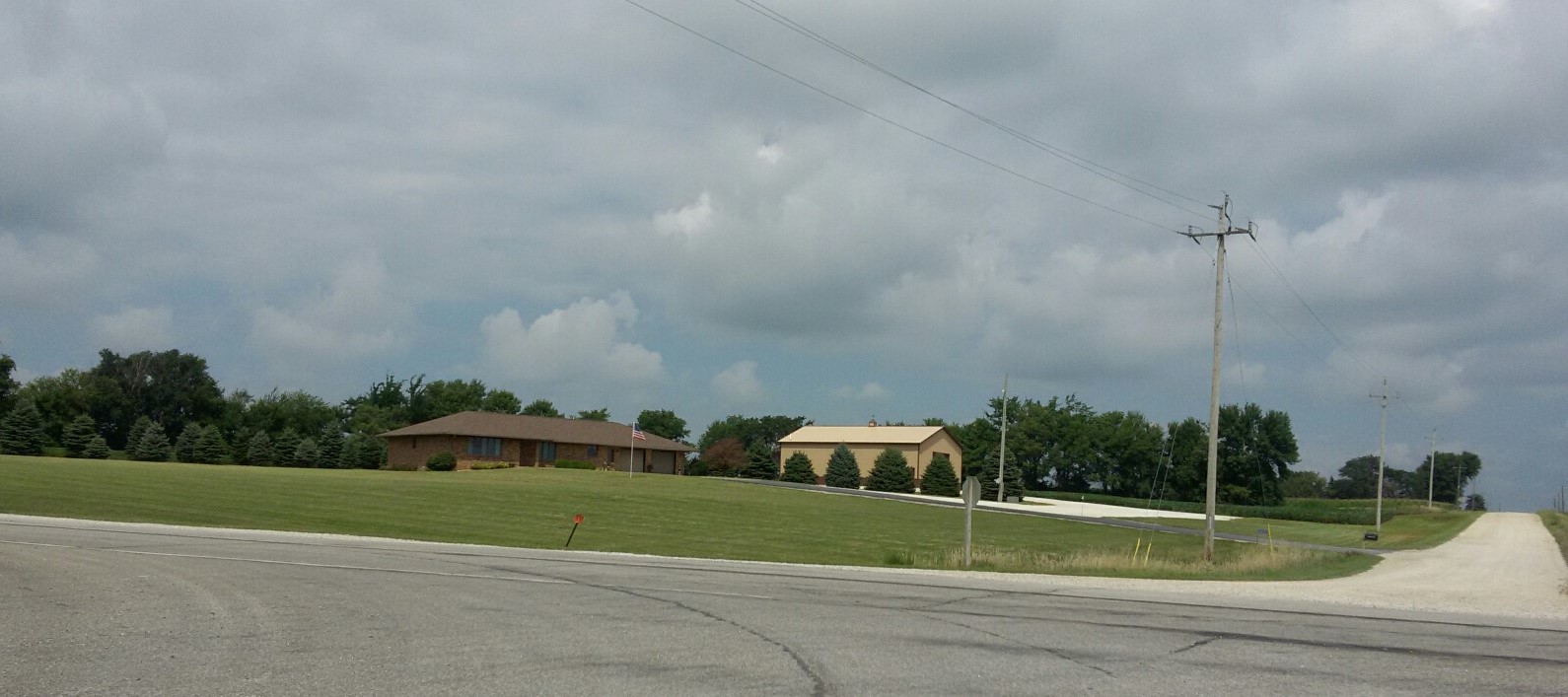
Starlite Drive-In Site 2016

All that is left is the many happy memories of watching feature films on the big screen from the comfort of your own vehicle on a warm summer night. And, of course, of the beautiful fireworks display every July 4th.

Until next time,

Jean, a/k/a Kossuth County History Buff


If you enjoyed this post, please don’t forget to “like” and SHARE to Facebook.  Not a Facebook user?  Sign up with your email address in the box on the right to have each post sent directly to you.

Be sure to visit the KCHB Facebook page for more interesting info about the history of Kossuth County, Iowa.


Reminder:  The posts on Kossuth County History Buff are ©2015-16 by Jean Kramer.  Please use the FB “share” feature instead of cutting/pasting.