Thursday, November 19, 2015

THE SOLDIER BRIDEGROOM

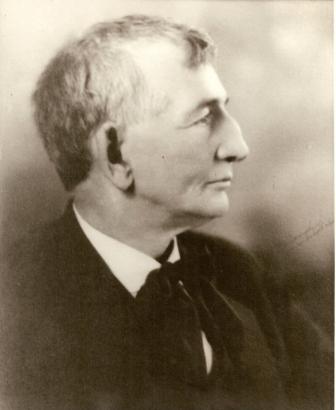
A few years ago members of the Kossuth County Genealogical Society put together a display regarding Civil War veterans who either enlisted from Kossuth County or settled here after the war.  I was lucky enough to work on that project and learned so much about the sacrifice each and every one of these brave men of the armed forces made to reunite our country.  One story was that of William Cleary, the only Civil War soldier married in full uniform in Kossuth County.  The fact that a young soldier would travel all the way from Georgia to northern Iowa to wed his bride—knowing that he would have to walk much of the way on foot and then a short time later turn around and go back—was such a romantic notion to me that I had to find out more.   It is his story that is told here today.

The Groom

William C. Cleary was born in County Clare, Ireland on August 4, 1838, and came to America with his widowed mother in 1851, settling in Noble County, Ohio.  He went to Wisconsin in 1857 and when the conflict broke out, enlisted in Company C of the 18th Wisconsin infantry in December of 1861. He participated in many battles including Shiloh, Corinth and the siege of Vicksburg.  He killed a man in the battle of Altoona Pass which haunted him for the rest of his life.  It was shortly after this battle that his company was granted a furlough.  He took this opportunity to travel home with A. W. Caulkins, the brother of his fiancĂ©e, to take a homestead in Plum Creek Township and to marry his bride, Mary.  The two had met in Wisconsin and had become engaged before Will marched off to war.  Mary had been only 15 years old at the time of their engagement.

When he returned to his company following the furlough, he participated in Sherman’s march to the sea and took part in the Grand Review in Washington, D.C.

Many years later, William read a paper at the annual meeting of the Kossuth County Historical Society entitled “Reminiscences of Early Algona.”  That story was published in the Upper Des Moines newspaper on December 17, 1913.  I was delighted to find that it described his trip and the wedding itself, as well as recounted a harrowing trip in the early days of their marriage.  Here it is in his own words:

        “By request I am about to give you a few reminiscences of the early days of Kossuth county.
        “In November, 1864, A. W. Caulkins and I came from Altoona, Georgia, on furlough from the army with our guns and equipments.  Cedar Falls being the terminus of the railroad, we walked across the country to Algona.
        “The night of November 28th, about 10 p.m., we struck Mr. Hodges’ little house, which was the first this side of Luni at that time.  They divided their bed and wanted us to take half, but we refused and took the floor.
        “The next day was Sunday.  We started after breakfast for Irvington and made Dr. J. R. Armstrong’s acquaintance.
        “We reached Algona, stopped at the Harrison house and inquired for Orrin
The Soldier Groom - kossuthhistorybuff.blogspot.com - The Town Hall in Algona

Caulkins, Mrs. Harrison came to the door and pointed to the town hall, which stood where John Galbraith’s store now stands.  She said, ‘There stands Mr. Zahlten’s team.  Wait till church is out and you can ride part way with him.’  So we waited and he took us home and gave us dinner.  After dinner he drove us up to Mr. Caulkins.’
        “On Dec. 10th, 1864, Mary A. and A. W. Caulkins, Isabelle Roan and I came down to Father Taylor’s.  We ran into an old fashioned sewing society.  As I remember it, those present were Father Taylor, Mrs. Taylor, Mrs. Stacy, Mrs. Paine, Mrs. Schenck, Mrs. Rist, Miss Delia Schenck, Mrs. Henderson, Mr. Taft, (then city school teacher) and Mrs. Blanchard.
        “The ladies were busy, preparing and making needful articles for sick and wounded soldiers.  After telling Rev. Taylor my errand Miss Caulkins and I were married.  Then they insisted on having our tea with them.  I believe I have the honor of being the only soldier in Kossuth county, who was married while in actual service, and in full uniform.
        “After visiting as long as my furlough would permit, I returned to the war and served till the close of the same.  I received my discharge in July, arrived home in August, and then began putting up hay and getting ready to live on my homestead.
        “When winter came I cut and hauled logs to the sawmill for the lumber to build my house.  I split and made the shingles by hand.  My wife and I started for Waverly with our team to buy windows, nails, etc., to finish the house.   We also bought a bedstead, a stove and a few dishes to keep house with.
        “We drove through to Waverly alright, but a thaw set in while we were visiting friends in Clarksville, and we had to leave our barrel of salt and some other things in order to lighten our load.  Before we reached Butler Center we came to a prairie stream and found it frozen over.  A man ahead of me started to cut a channel through the ice.  I helped with my ax and we soon had the ice cut but could not remove the chunks.  So I thought I would risk it anyway; but I came near losing my team.  We stopped at the first house we came to.
        “Next day, in the afternoon, we came to the west Cedar.  It was out of its banks and all over the bottom.  There was a bridge across the channel, but the bottom was covered on the west side for about forty rods.  So I unhitched the horses and rode the best one through the water to see if I could get the wagon across.  I found a way by watching the current of the water, where it did not come up on the horse’s sides much.  I went back and hitched the horses to the wagon and brought it through safely, but when we reached the dry ground on the hills we saw a prairie fire sweeping down towards us.  So I drove towards the fire, than started a back-fire and drove the team onto the burned ground.
        “By that time it was dark and neither house nor road in sight.  We could see quite a grove up the river, so we mounted the horses and rode towards it.  We came to a fence and followed around it till we heard a dog bark and found a log cabin and a couple of aged Hollanders, who received us very kindly, gave us a good warm meal, a good bed, provided for our horses, and gave us breakfast and a lunch for our dinner.  Those dear old people would not take a cent for their trouble.  We have forgotten their names, but never will forget their kindness.
        “There was nothing more of interest till we left Luni.  We spent the last night out at Luni and crossed the Boone there on a bridge, but could not cross Prairie Creek because of high water, so we followed up the east bank, keeping well away from the stream.  We followed its general course, however, till it spread out into a wide slough, then crossed it somewhere between Corwith and Wesley.  There were no houses on the route.  We wandered around among the sloughs and finally reached Father Caulkins’ about 10 p.m., tired, hungry and glad to get home.”

The Bride

Mary A. Caulkins was born in Bloomington, Illinois, in 1846.  When she was four years old, her family moved to Wisconsin and then in 1862, they moved to Kossuth County.  She began teaching school here upon her arrival.  She was just 16 years old.  After her wedding to William Cleary on December 10, 1864, she continued to teach for a year until his return from the war.  The two farmed east of Algona for a few years, but in 1872 moved into town where Mr. Cleary opened a grocery and general store, Cleary & Caulkins, on State Street just south of the courthouse.  Mary operated a dressmaking business from the store.
The Soldier Groom - kossuthhistorybuff.blogspot.com - South Side of State Street 1870
Cleary's Store on far right

Their Life Together

William became widely known for his beekeeping skills.  He began keeping bees in the 1880s and continued growing his beekeeping business until his health no longer allowed him to be active.  In 1903 he harvested more than 2500 pounds of honey from his hives and expected a profit of more than $400.  It was noted in the local news of the Algona Courier that “. . . it seems that a few hives of bees yield a bigger income than a quarter section of land valued at $10,000.”  William gave various educational presentations on bee culture at meetings of farm organizations and won numerous awards at the local fair for his honey.

The Clearys were unable to have any children of their own, but they raised three foster daughters as well as fostering many other children for various periods.  The couple also were active in their church—first the Congregational Church and then in 1883 becoming faithful members of the Adventist Church. Will served several terms as an Algona city councilman and as city treasurer.  He was very active in the local G.A.R. organization and Mary worked tirelessly for the Algona Relief Corps.

In 1914 William suffered a stroke, causing paralysis.  Although unable to work, he did recover to the point where he was able to go uptown almost every day.  The couple celebrated their 50th wedding anniversary that same year with a well-attended reception.  They received a wide variety of gifts including a fine Morris rocker from the G.A.R. post and a sewing rocker from the Women’s Relief Corps.

William’s health gradually declined but he continued his interest in the world around him.  As World War I began to wear down, his greatest desire was to survive to see the war ended.  He realized his wish when, although in feeble health, he was able to celebrate the Armistice.  The very next day he suffered another debilitating stroke and subsequently passed away on November 16, 1918. 
The Soldier Groom - kossuthhistorybuff.blogspot.com
303 West McGregor in 2015
Mary continued to live in their home at 303 West McGregor, sitting at the top of what was locally referred to as Cleary hill.  During the last four years of her life, one of her foster daughters, Dr. Stella Martinson who had settled in Chattanooga, Tennessee, came back to care for her mother.  Mary Caulkins Cleary was unable to leave her home for the final year and a half and she passed from this world on June 30, 1929, at the age of 83.  She was buried next to her brave soldier husband in Riverview cemetery in Algona.

Until Death Do We Part

The Soldier Bridegroom - kossuthhistorybuff.blogspot.com - Cleary gravestone
Although many miles and a war separated these young lovers, this soldier’s determination gave him the energy to travel half way across the country to marry his sweet bride.  It is likely that the moment was never preserved with a photo, but it doesn’t take much imagination to picture these two standing in front of Fr. Taylor and the local sewing society exchanging their vows—the handsome soldier in full uniform pledging his undying love to the girl who had waited patiently for his return—a love that endured until Will's death almost 54 years later.


Until next time,

Jean (a/k/a Kossuth County History Buff)


If you enjoyed this post, please don’t forget to “like” and SHARE to Facebook.  Not a Facebook user?  Sign up with your email address in the box on the right to have each post sent directly to you.

Be sure to visit the KCHB Facebook page for more interesting info about the history of Kossuth County, Iowa.


Reminder:  The posts on Kossuth County History Buff are ©2015 by Jean Kramer.  Please use the FB “share” feature instead of cutting/pasting.

Thursday, November 12, 2015

WORLD WAR I FIRST CONTINGENT

In less than two years we will be commemorating the centennial of the entry of the United States into World War I.  The U.S. declared war on Germany on April 16, 1917, and later that year, Kossuth County began drafting some of their eligible young men into service.

The first contingent to go consisted of ten men from various parts of the county.  They included Elmer C. Ziegler and Earl Willson from Algona; Charles M. Cawley of Bancroft; Ralph Alden Smith, Robert Axel Haglund, John Sundven, Albert N. Carlson, and Charles Hart of Swea City; and Adam Richard Schimmel and Michael Anton Goetz of Wesley.

World War I First Contingent - kossuthhistorybuff.blogspot.com

All of the men were American citizens with the exception of John Sundven who was Norwegian, but who had applied for citizenship.  He was an experienced soldier however, since he had served two years in the Norwegian infantry.

The men were sent off in style.  Reporting to the courthouse in the forenoon, they were taken for a tour of Algona by car and were admitted to the fair free of charge.  At noon they were taken to the New Algona hotel where they were served lunch at a special table decorated with flags of the allied nations.  Several speeches were given by notable local citizens and many other dignitaries were there to see them off including Algona’s mayor and the Kossuth County Sheriff.  Robert Haglund was put in charge of the group until their arrival at Camp Dodge.  Following the lunch, he lined up the group in front of the courthouse and, led by the band and a group of old soldiers, they marched to the train depot where there was a large crowd gathered to send them off.

A few days after arrival at Camp Dodge, Mr. Haglund wrote about their trip and first few days in camp.  The letter was published in the Upper Des Moines – Republican September 19, 1917.  Here is his story, in his own words:


Camp Dodge, Iowa, Sept. 14, 1917—Mr. Claude Samson, Algona, Iowa,

Dear friend:  I should have written you sooner but it seems like I can never get around to it.  We have been very busy since we arrived and when we do have any leisure time there is so much going on around that you can hardly think.  This certainly is a live bunch of engineers.

Well, we arrived here o.k., but were about two hours late, so I had to feed the boys a couple of times.  It cost me $1.55 at Jewel Junction and $1.95 at Des Moines.  I got bills for both but lost them somewhere in the shuffle.  Some of the boys who were in command had their local board’s meal ticket books with them and returned them after arriving at Camp Dodge, which seems to be a pretty good system.

Cawley was assigned to the Signal Corps; Sundven, Olson and Smith to the infantry supply train, and the rest to infantry.  I was assigned to Co. C, 313th engineers.

We were put to work Thursday morning, and have been hitting the ball ever since, doing police duty, in the kitchen, inside and around the kitchen, inside and around the barracks. We have been out on two hikes, Monday and Tuesday.  Tuesday’s hike was about seven or eight miles long.   Also drilling in the school of soldier’s squad.  We were examined and mustered in on Friday, the 7th and vaccinated and inoculated last Wednesday.  I got through in fine shape, but some of the boys got pretty sore, and several got quite sick and fainted.

World War I First  Contingent - kossuthhistorybuff.blogspot.com
Camp Dodge
This certainly is some camp.  I will send you a picture of it as soon as I can get one, which you can have framed and hang up in your office.  We have good quarters, and are well fed, so if anybody is worrying about that part they can rest easy.  We have been issued the following equipment so far:  cot, two pair blankets, meat can, knife, fork, spoon, coffee cup, shoes, shirt, hat, four pair socks, overcoat, barrack bag, gloves, hat cord and underwear.

Here are some things that the boys ought to bring with them:  Suit case to put things in, bath towels, hand towels, neckless sweater, shaving articles, tooth brush, clothes brush, hair brush and comb, tooth paste, hand and laundry soap, soap box and some clothes to knock around in that aren’t much good, as a good suit of clothes won’t last very long around the kitchen or coal wagon.  Also a pair of easy shoes.  It is mess, so will have to close.  Again thanking you for the honor conferred upon me as commander of Kossuth county’s first quota, I remain, very sincerely, your friend,

PRIVATE ROBT. A. HAGLUND
Co. C, 313th Engineers,
Camp Dodge, Iowa.

P. S.  Would like to see a copy of this week’s Algona papers.

As time allows, we will follow several of these soldiers from the first quota to see what happened to them.  It would be wonderful to track down individual photos of these brave soldiers.  If you can share any leads as to how to obtain photos of them, please let me know.

Until next time,

Jean (a/k/a KC History Buff)


If you enjoyed this post, please don’t forget to “like” and SHARE to Facebook.  Not a Facebook user?  Sign up with your email address in the box on the right to have each post sent directly to you.

Be sure to visit the KCHB Facebook page for more interesting info about the history of Kossuth County, Iowa.

Reminder:  The posts on Kossuth County History Buff are ©2015 by Jean Kramer.  Please use the FB “share” feature instead of cutting/pasting.

Thursday, November 5, 2015

A TALE OF TWO CASUALTIES - FATHER AND SON

During this month of November, I want my posts to honor some of the many veterans from our county who have served our nation.  This post is dedicated to a father and son.

As a young girl growing up in Algona, I very vividly remember hearing of the death of Bill Higgins while he was serving in the Vietnam conflict.  Bill had graduated from Garrigan High School in 1961, just a year after my oldest brother, and was only 26 at the time of his death.  He was the fifth Vietnam casualty from Kossuth County.  He was survived by his mother, Dorothy (McEnroe) Higgins, for whom his death came not only as a crushing blow, but also a cruel reminder of the earlier loss of her husband, Captain William Bigley Higgins, during World War II.  This is their story.

Captain William B. Higgins 

A Tale of Two Casualties - Father and Son - kossuthhistorybuff.blogspot.com - World War II and Vietnam
Captain Higgins was born in Whittemore, Iowa, September 30, 1914, the son of William and Elizabeth (Bigley) Higgins.  He graduated from the Presentation Academy and then attended Creighton University at Omaha studying journalism.  After a short stint as a linotype operator, he purchased the Whittemore Champion which he published until he was inducted into the service in March of 1942 with a rating of second lieutenant in the reserve officers’ corps.  He spent time in Fort Benning, Georgia; Camp Adair, Oregon, (where he was promoted to first lieutenant); and Camp Shelby, Mississippi.  In July of 1944, he was home on furlough and spent time with his wife and little son, William Patrick, who had been born May 28, 1943, while the family was in Mississippi.  Dorothy and her son had moved back home to be near relatives while William was overseas.  Following the furlough he was ordered to report to Camp Meade, Maryland, and went immediately overseas to take part in the Normandy campaign.  He was promoted to Captain just prior to leaving the states.

A member of the 69th Infantry Division of the Army, Captain Higgins was in Germany at the time of his death.  A letter from the front gave details of his death: 

     “We were near Schlieden, Germany, at the time of his death, and we had our Company C. P. set up in a house.  We had not been receiving much enemy fire up to the 11th of February.
     On this morning, about 10:55, two shells went over the house, landing to our rear.  The captain was changing his socks at the time, and the 1st sergeant was sitting at his desk in the same room. The phone rang, and it was the colonel seeking information regarding the shells.  The 1st sergeant got up, went into a rear room, and looked out the window to see where the shells were bursting.
      While the 1st sergeant was standing there, a fatal shell came in, hitting the side of the house and bursting right into the C. P. room, throwing steel and dirt all over the room.
     Capt. Higgins died instantly, and the 1st sergeant received many slight wounds when steel flew through the open door towards him.”

The body of Captain Higgins was originally interred in the Henri-Chapelle military cemetery in Belgium.  Several years after the war ended, his body was brought home and buried in St. Michael’s Catholic Cemetery in Whittemore.

A few months after the Captain’s death, his widow was notified that he had been posthumously awarded the silver star for gallantry in action in a battle which occurred just a few days before his death.  The citation read as follows:

  “On 2 February, 1945, Captain Higgins, commanding Company “H,” with complete disregard for constant fire from two enemy tanks covering the approaches to ***, located positions in advance of his own lines and moved the guns into position before final assault on the town began.
    During ensuing attack, his example of cool and aggressive action under fire was an inspiration to all *** troops.  As a result of the close support provided by Company H’s machine-gun fire, the attack was successfully secured.
    The gallantry, leadership, and disregard for personal safety displayed by this officer reflect highest honor upon himself and the United States army.”

Lieutenant William P. Higgins

A Tale of Two Casualties - Father and Son - kossuthhistorybuff.blogspot.com - World War II and Vietnam
His son, Bill, grew up in the Algona, was an outstanding football player for the Garrigan Golden Bears, and a good scholar.  He attended Creighton University in Omaha for two years and then graduated from the University of Iowa, College of Law on June 9, 1967.  Prior to graduation, he enlisted in the United States Marine Corps and received his commission as second lieutenant.  He passed the bar exam before leaving for duty.  Lt. Higgins took his flight training at Pensacola, Florida, completing his first solo flight in a helicopter on May 16, 1969.

The lieutenant was then stationed at the Marine base in Santa Ana, California, until October 12, 1969, when he was sent to Vietnam.  The fatal crash which took his life occurred on December 28th of that year.  A letter from Lt. Col. C. R. Dunbaugh recounted what happened.

    “I had the pleasure on several occasions to have him assigned as my co-pilot.  A more competent, sincere officer couldn’t be asked for.  Earlier the same day of the accident he had flown with me for a short flight.
     “The mishap occurred at night.  The flight was from Hue Phu Bai to the north of Danang to Marble Mountain.  They were under positive radar contact and were flying at 3000 feet of altitude.  Radar observed the aircraft turn to the right of course and fly toward a 3900 foot high mountain.  Frantic calls were made on all available radios from the radar controllers, but no response was observed in the direction the aircraft was flying.  The wreckage was found at the 3000 foot elevation on the side of the mountain.  Search aircraft were immediately dispatched but due to the mountainous terrain and the cloudiness the wreckage was not found until the next day.  The accident board arrived at the conclusion that the aircraft flew into the mountain.  Enemy fire was not a factor. . . Lt. Butler was the aircraft commander and Bill his co-pilot on this flight.”

The body of Lt. William P. Higgins arrived home on Saturday, January 10, 1970.  His funeral was held the following Tuesday and he was laid to rest beside his father, Captain William B. Higgins, at St. Michael’s Catholic Cemetery in Whittemore.

Epilogue

Young Bill would not have had to enter the military.  Because his father had died in the service of the nation, he was exempt from the draft.  However, the call of patriotism was too strong for him to ignore.  His mother later said, “He felt it was his duty.  He wanted to fly.  He wanted to do some things before he sat down at a desk.  I don’t think anybody could have talked him out of it.”

Dorothy Higgins passed away in 2002.  She never remarried and Bill was her only child.

Until next time,

KC History Buff
  
If you enjoyed this post, please don’t forget to “like” and SHARE to Facebook.  Not a Facebook user?  Sign up with your email address in the box on the right to have each post sent directly to you.

Be sure to visit the KCHB Facebook page for more interesting info about the history of Kossuth County, Iowa.


Reminder:  The posts on Kossuth County History Buff are ©2015 by Jean Kramer.  Please use the FB “share” feature instead of cutting/pasting.

Thursday, October 29, 2015

COLD BLOODED MURDER

With Halloween just a couple of days away, I thought it might be interesting to bring you a story of lies, deceit and, yes, cold blooded murder.

The Benjamins

Professor L.T. Benjamin was hired by the Congregational Church of Algona in 
Cold Blooded Murder - kossuthhistorybuff.blogspot.com - Professor L. T. Benjamin
L. T. Benjamin
1903 as organist and musical director.  He was a master of the pipe organ and also taught organ and piano.  Besides Professor Benjamin, the family consisted of his wife, Minnie, and their three children, Mary, Paul and Ralph.  The family had previously resided in Manson, Iowa, where the professor had held a similar position with the Congregational Church there.  They all soon moved to Algona and settled into their new community.

The professor was very talented and almost immediately had large numbers of students under his instruction.  In addition to providing all of the music for church services, Benjamin provided music for weddings, funerals and other events at the church.  He often provided music for various community events and was a member of several community organizations including the Algona Harp Orchestra for which he served as pianist.

Mrs. Benjamin too became an active member of the community.  She had a beautiful singing voice and often joined her husband in providing music at the church.  Minnie belonged to several organizations including Eastern Star and the Women’s Library Aid Society.  She became involved in the local Red Cross serving in many capacities, finally as head of the entire Home Service Department where she provided invaluable assistance to many soldiers and their families during and after World War I.  Mrs. Benjamin became well known in the area for her kindness and generosity.

So it came as terrible shock to the entire community when on January 15, 1921, Minnie was brutally murdered. 

The Crime Scene

According to an article published in the Upper Des Moines Republican on January 21, 1921, the crime scene was described as follows:

“The body of Mrs. Benjamin lay upon the floor, the face covered with blood, the clothing disarranged to give the appearance of another crime.  The walls were spotted with blood in places and the door and the casings were spattered.  Four holes were found on her head, inflicted with a hammer that was found near by.  One gash on top of the head appeared to have been made with an axe.  The body was terribly bruised, the chest and the abdomen having apparently been kicked.  It was no doubt the most brutal murder ever committed in northern Iowa.” 

Cold Blooded Murder - kossuthhistorybuff.blogspot.com - Benjamin crime scene
Drawing of crime scene from January 26, 1921
edition of The Upper Des Moines - Republican

The body was discovered by Professor Benjamin and their boarder, Alice Moline, when they returned to the house in the evening.  Law enforcement along with Dr. Hartman were called.  After examining the body, the doctor determined that Mrs. Benjamin had been dead for about 30 minutes.  A hammer which was determined to be the murder weapon was found at the scene along with a rag soaked in blood which had been thrown in the stove and was partially burned.  Mrs. Benjamin was 53 years old.

The Investigation Begins

Cold Blooded Murder - kossuthhistorybuff.blogspot.com - Benjamin family house
"The Death House on West State Street"
as pictured in the
January 26, 1921 edition of
The Upper Des Moines - Republican
The house in which the Benjamins lived was about three blocks west of the courthouse and was owned by D. B. Austin.  Coroner W.E. Laird was called to remove the corpse to the undertaking parlor.  While at the crime scene, Laird called Professor Benjamin back in to look at the body.  The husband seemed cool and collected—not like a husband whose wife had just been brutally killed.  The coroner also noticed blood spots on the coat, vest and pants of the professor.  He later issued a warrant for his arrest.  Benjamin was taken into custody at the home of his friend, T. H. Wadsworth, where he had gone to spend the night.

Benjamin denied the heinous crime.  In his statement to the police, he stated that he had been downtown conducting various business transactions earlier in the afternoon.  He had encountered Mrs. Benjamin and the two of them had shopped at the grocery store before returning home at 5:30 p.m.  A neighbor saw him leave about 15 minutes later and he went back downtown where he visited the County Savings Bank, Miller Drug Store, and Moe & Sjogren’s where he purchased some fruit and a loaf of bread.  He visited Rexall Drug Store where he bought a newspaper and then proceeded to Miner & Stephenson’s Candy Kitchen where their boarder, Alice Moline, worked.  Alice was engaged to be married to one of the Benjamin sons.  He waited for her to get off work and the two of them walked home, finding the house dark and upon entry, discovering the body.

Despite his denials, County Attorney S. D. Quarton, Sheriff George Hackman, G. A. Brunson, and state agent O. O. Rock continued their investigation and circumstantial evidence began to mount.  Two motives for the crime were formulated.  Their first was that he wanted his wife out of the way.  Rumors had circulated through the area for several years that Benjamin had been having an illicit affair with one of his students.  Secondly, as the beneficiary of an insurance policy on the life of his wife, he would receive proceeds of $1,000.  Professor Benjamin had lost many of his students due to the rumors of the inappropriate relationship and he had recently resigned his position at the Congregational Church at the request for the church trustees.  He had obtained a job in Chicago and he and his wife had been packing up their possessions for the move when the slaying occurred.  It was well known that the couple were in financial straits. 

Benjamin was constantly grilled while in custody.  He refused to break. 

The “Other Woman” Tells Her Story

Meanwhile, the “other woman” was located and questioned.  Aged 31, she had met the professor three or four years earlier when she began taking piano lessons from him.  He began to make advances toward her after just a few weeks of lessons.  She found herself falling in love with him and returned his advances.  Knowing that he was still married, she did move out of state for a short time, but soon returned to him.  Over and over again Benjamin told her that he and his wife were planning to divorce and used multiple excuses as to why it was not happening.  When she would bring up the topic of the divorce, he kept blaming the delays on inattentive attorneys or requirements set by the court regarding the minor children.  At one point he told her that they had already received a divorce in Fort Dodge, but were living together until their youngest son graduated from high school. Her parents investigated and found out that there was no divorce in Fort Dodge and confronted him.  He eventually smoothed over the situation with "the other woman" and was able to convince her that he still planned to marry her.  She states that shortly before the tragedy occurred, Benjamin had told her that the divorce had been finalized and so she had prepared her wedding clothes for the trip to Chicago.

At some point, Minnie Benjamin discovered the affair and several times confronted her husband, threatening divorce.  Each time he begged for her forgiveness and told her he would end the relationship.  The professor in fact did not bring an end to the affair, but instead continued to conceal his true behavior to both women.

The Court Proceedings

On the 25th of January, just ten days after the murder, a grand jury was to be impaneled to determine whether or not charges would be brought against him.  That morning the professor met with his attorney, T. P. Harrington.  Shortly before the arraignment set for 2 p.m., Benjamin met with his children.  That meeting appears to have changed the defendant’s mind concerning his continued declarations of innocence.  Before the proceedings could begin in earnest and at Benjamin’s request, Harrington requested to meet privately with the presiding judge at which time the professor admitted his guilt.  The County Attorney immediately filed murder charges against him.  The defendant was then brought back into open court where he publicly admitted his guilt.  Judge D. F. Coyle then stated that evidence concerning the degree of murder would be taken the following Tuesday, February 1st.

Observers began arriving early for the hearing.  When the Clerk arrived that morning, two men from LuVerne were found on the floor immediately outside the courtroom sound asleep.  When the hearing began, there was standing room only and the hallways and stairs leading to the courtroom were too crowded for law enforcement to pass without great difficulty.  The defendant had to be brought into the courtroom through the Clerk’s office.

The defendant was sworn in and began giving his testimony.  All questions were asked by the judge.  He testified that problems arose in his marriage beginning 12 to 15 years before.  The professor began drinking too much and flirting with other women.  He put no blame on his wife and stated that the affair that he later entered into caused his family much shame and distress.  The public gossip caused him to be ostracized which resulted in the loss of many students putting the family into financial hardship.  His forced resignation from his position at the Congregational Church placed him under extreme stress.  There were many bills and not enough money to make the move to Chicago.

He stated that when he and his wife returned home from the grocery store the night of the murder, he had gone out immediately to bring in some coal for the stove.  While he was gone, Mrs. Benjamin got the mail and found a personal letter which she read.  The professor stated that when he returned to the house with the coal, he found her extremely wrought up.  He did not know who the letter was from as she threw it in the fire.  He tried to reason with her but she
Cold Blooded Murder - kossuthhistorybuff.blogspot.com - Block in which Benjamin family lived
Block of West State Street on which
the Benjamin family lived as it looks in 2015
became more agitated with him.  Benjamin began to see all of the plans he had made begin to unravel and, in a fit of frenzy, he picked up the hammer which they had been using to seal the packing crates and struck a blow to her head.  He stated that he did not remember anything that happened after the first blow and did not know why he attempted to cover up the crime.

County Attorney Quarton stated that the offense was clearly premeditated, setting out all the evidence against the defendant, and adamantly argued for the death penalty.  Defense attorney Harrington argued that the deed was not premeditated but that the defendant had acted on impulse.  He stated, “It seems to me that no sane man could contemplate such an act as was committed.  Mr. Benjamin was considered an average man intelligently.”

Sentence is Pronounced

Cold Blooded Murder - kossuthhistorybuff.blogspot.com - The murder of Minnie Benjamin by her husband, L.T. Benjamin
Judge D. F. Coyle
Judge Coyle gave the law and also expressed his adversity to capital punishment.  After a touching talk with the defendant about reforming his life by bringing his story to others to prevent future incidents like this one, the judge determined that the murder was not committed with premeditation, and pronounced him guilty of second degree murder.  Professor Benjamin was sentenced to 50 years at hard labor at Fort Madison penitentiary.  He was taken by train to the prison later that same day.  He was 54 years old.

Professor L. T. Benjamin died at the prison following a hernia operation in April of 1923 after serving just two years and two and a half months of his sentence.  Where he was buried is not known.


Until next time (and Happy Halloween!),

Jean (a/k/a Kossuth County History Buff)


If you enjoyed this post, please don’t forget to “like” and SHARE to Facebook.  Not a Facebook user?  Sign up with your email address in the box on the right to have each post sent directly to you.

Be sure to visit the KCHB Facebook page for more interesting info about the history of Kossuth County, Iowa.

Reminder:  The posts on Kossuth County History Buff are ©2015 by Jean Kramer.  Please use the FB “share” feature instead of cutting/pasting.

Tuesday, October 27, 2015

UPDATED POST ON THE WEDDING GIFT HOUSE

To say that I have been overwhelmed by the response to the story “The Wedding Gift House” posted on October 22, 2015, would be an understatement!  I am delighted that so many readers enjoyed the story and that many decided to like the Kossuth County History Buff Facebook page or follow by email to insure they receive future posts.  Thanks so much!


New Information

I do have an update to the story that I want to share with you.  Thanks to some
Updated post of The Wedding Gift House - kossuthhistorybuff.blogspot.com - Jeff Jorgenson photo of Tribon house
The Tribon house when owned in later
years by the Jorgenson family
information provided by Jeff Jorgenson who grew up in the house at 332 North Thorington, I have determined that the color photo of the house located at 322 North Thorington shown with the original story is not the Tribon house, but actually the house next door.  I must admit that I have had some misgivings about the house as I compared it with the photo from Picturesque Algona.  The two houses seemed to have the same roof lines, but some other features didn’t quite seem to match.  But all evidence I looked at seemed to confirm that the house in the book was located at 322 North Thorington.  

The original Picturesque Algona was published in 1900 without addresses assigned to the various buildings pictured in the book which would have made it almost impossible 115 years later to determine their whereabouts.  Thankfully, the Algona centennial committee decided to reissue the book in 1954 and, bless them, they provided addresses at that time.  The 1954 edition clearly shows the Tribon house address as 322 North Thorington.  Since Vallie Tribon was still alive in 1954, I trusted this information to be correct. 

Updated post of The Wedding Gift House - kossuthhistorybuff.blogspot.com
House that sits on the
site in 2015
I try to be very thorough in my research and my notes indicate that when I was researching this story, I did check courthouse records.  However, the manner in which the real estate was described has changed between 1898 and 2015.  Evidently when trying to match the old description to the new one, it again appeared that the Tribons had once owned the property located at 322 North Thorington.  The Kossuth County Assessor was able to show me aerial photos from which I was able to see how the mistake might have been made. 


Jorgenson Photos

The photos posted here were provided by Jeff from the Jorgenson family collection with the exception of the photo which shows the house that now sits on this site.  I did ask Jeff to describe the inside of the house so that I could share it with you as well.  He was even nice enough to include photos of the staircase and fireplace.  
Updated post of The Wedding Gift House - kossuthhistorybuff.blogspot.com - Jeff Jorgenson photo of Tribon house


The first floor of course had the large front porch leading to a foyer entry.  It had a “master bedroom” on the first floor.  He thinks that the house as originally built did not have a bedroom on the main floor and that this bedroom was part of a later remodel.  The only full bath in the house was located on that floor along with the kitchen and a living room/great room with a fireplace on the east wall and two eight foot sliding doors on each end and a large picture window on the west wall.

Updated post of The Wedding Gift House - kossuthhistorybuff.blogspot.com - Jeff Jorgenson photo of Tribon house
The second floor had four bedrooms with big cedar lined closets and a small kitchen. The south facing bedroom had a fireplace.  There was also a half bath on that floor.

I love Jeff’s description of the attic: “The attic had a very narrow and steep staircase you had to climb like a ladder.  It was very large.  The square footage was almost the entire footprint of the house.  It was always fun, but a bit creepy going up there since it had old dress mannequins which looked like people in the dark to a kid.”

The house had steam radiators heated with a furnace which used to burn coal and was then converted to gas.  Jeff remembers that the house was always cold as the radiant heat could never keep up with all the air leaks and lack of insulation.


Owners after the Tribons added a breezeway and garage addition on the north side of the house.

The End of a Beautiful Home


Although I hate being wrong (don't we all!), it is exciting to be able to correct an error
Updated post of The Wedding Gift House - kossuthhistorybuff.blogspot.com - Jeff Jorgenson photo of Tribon house
Photos after the fire
in 1988
in Picturesque Algona.  I am so pleased that Jeff took the time to contact me to share photos of the “real” Tribon house which once stood at 332 North Thorington.  My only disappointment is that the house was destroyed by a fire back in 1988.  A part of me loves the Tribons’ story so much that I really wanted the house to still be standing.   Thanks to the photos shared by Jeff and the one in Picturesque Algona, the sweet memories of this house will be preserved forever.

Feel free to contact me any time about a story.  I truly value your comments and input and hope we make more discoveries along the way!

Back to my research,

KC History Buff


If you enjoyed this post, please don’t forget to “like” and SHARE to Facebook.  Not a Facebook user?  Sign up with your email address in the box on the right to have each post sent directly to you.

Be sure to visit the KCHB Facebook page for more interesting info about the history of Kossuth County, Iowa.


Reminder:  The posts on Kossuth County History Buff are ©2015 by Jean Kramer.  Please use the FB “share” feature instead of cutting/pasting.

Thursday, October 22, 2015

THE WEDDING GIFT HOUSE

One of the lovely homes featured in “Picturesque Algona” is that of Dr. Frank and Mrs. Vallie Tribon located at 322 North Thorington Street.  Dr. Tribon purchased the lots in 1897 for the sum of $900 with the intention of building a fine residence as a gift to his bride to whom he was to be married the following year. 


The Young Couple

Frank Lewis Tribon came to Algona in March of 1893 and established his medical practice here.  He was born October 1, 1863 in Blackhawk County.  He later attended Upper Iowa University at Fayette and the University of Iowa where he graduated from medical school in 1892. 

Vallie Frost was the oldest of eight children and was born July 21, 1875.  Her father was a telegrapher and agent for railroads in Iowa, Minnesota and South Dakota.  The family was of modest means, living above depots and salvaging coal and other household supplies from damaged rail cars.  They moved a lot due to her father’s occupation and schooling was obtained wherever they were located at the time.  Education was of great importance to Vallie, so much so that she went on to attend the University of Iowa which she paid for by working as a milliner.  It was there that she met Frank Tribon while he was a student in the homeopathic department of the college of medicine. 


Preparation begins

By 1898, North Thorington Street had become an “aristocratic” area of town with several very fine homes along its length. In keeping with the style of the area, Dr. Tribon hired an architect to draw the plans for a handsome structure containing large rooms with many wide windows.

The Wedding Gift House - kossuthhistorybuff.blogspot.com - Tribon house
Tribon House constructed in 1898


Construction was begun by Shadle & Herman in March of 1898.  The house was wired for electricity and featured sliding doors making it possible to close certain sections for privacy or to conserve heat.

Frank and Vallie were married on May 26, 1898 in an outdoor ceremony at the home of the bride’s parents in West Bend.  Following the service, refreshments were served on the lawn.  The happy couple departed the same evening for Algona.  Mrs. Tribon later recalled that she was immediately thrust into the trying phase of being the wife of a doctor.  They had just settled into their room at the Algona Hotel on their wedding night when her husband was called to deliver a child for his sister, Mrs. Mary Lampright.   

The house was not yet completed at the time of the Tribons’ wedding.  It was sided and roofed, but had many finishing details yet to be completed.  The young couple was forced to board elsewhere until the house was ready.  One can almost picture the bright summer day in August when this handsome doctor carried his young bride up the steps, across the front porch and over the threshold into their beautiful new home.


Settling in

The couple settled happily into married life.  The doctor had a busy practice which often took him away from home while he cared for his patients.  In those days doctors spent as much time out of their office as they did in it.  They made house calls both in town and in the country.  When he began his practice, Dr. Tribon would have used a horse and buggy to get around over dirt and mud roads to reach his patients.  Most babies were born at home and so he could easily be gone all day and well into the night while on an obstetrical call.  Antibiotics were not available, so often deaths occurred which today would be easily preventable.

Both Tribons became very involved in their community including their church.  The first Sunday after her marriage, Vallie joined the Methodist church and was an active member the rest of her life.  Over the years she served as superintendent of the Sunday school and taught young married couples a class on building strong Christian homes.

As their family grew, the house shared in their joys and sorrows.  Vallie loved to entertain and won awards for her home made angel food cake and bread.  The Tribons’ five children were born in the house, which included twin daughters, Ruth and Isabel.  Sadly, Isabel died when she was only a few days old.  Vallie also cared for her sister who passed away five days after delivering a baby in the Tribons’ house.


Entertaining

The Wedding Gift House - kossuthhistorybuff.blogspot.com - Tribon house
Frank and Vallie often entertained the members of the Halcyon Club which was founded in December of 1904.  The object of the club, in addition to being a social organization, was for the acquisition of knowledge on profound subjects.  The monthly meetings took place in members' homes and featured dinner, music, poetry and spirited debates.  For the February meeting in 1917, the Tribon house was decorated in bunting and the U.S. flag to celebrate Washington's birthday.  The patriotic colors also appeared on the table napkins and each guest received a miniature pasteboard U.S. flag.  Daughter Dorothy recited "Little Orphan Annie" and W.C. Dewel gave the history of the flag and Francis Scott Key's "Star Spangled Banner."

The topics and range of the debates varied widely.  At a meeting in 1912, Vallie was on the victorious side in the debate over the question: “Resolved, that the retaining of the Philippine Islands has been a detriment to the United States.”  Many papers on political topics were read and discussed at the meetings as well.  Clearly, this group enjoyed learning and expanding their horizons.

A particularly trying time for the family occurred during the flu epidemic of 1917-18.  The area doctors were on call night and day, frequently checking to see how patients were doing as whole families could be infected with influenza.  Dr. Tribon carried a heavy load during this period.  Vallie’s brother, Gernard Frost, succumbed to the flu during the epidemic. 

The house continued to play a central role in the life of the family.  Their front porch was just right for gatherings and several “sing-a-longs” were held out there to the enjoyment of their neighbors.  It was a happy day indeed when daughter Ruth was married to Lewis L. Bleakley on January 1, 1925.  Decorated in yellow chrysanthemums and ferns, the house welcomed 30 guests to the ceremony and four-course meal that followed.  The newly-married couple moved to Davenport, Iowa and then later to Milwaukee, Wisconsin.  Ruth developed a heart ailment a few years later and was brought back to the family home for treatment by her father.  She died there July 5, 1931 leaving a grieving husband and three small boys aged six and under to mourn her passing.


Life goes on

Over the years, Vallie organized spectacular church rummage sales and other money-making projects.  After being asked to conduct a private sale to dispose of household effects, a new business was begun.  Her sales were so well organized that they attracted huge gatherings.  Area merchants such as the Chrischilles store and Christenson’s had her conduct end of season sales.  Her fame grew and she was asked to conduct sales in places as far away as Chicago.  She chose to restrict most of the sales to the Algona area. 

Through their advancing years, the Tribons remained in their beloved home.  Just two days before their 50th wedding anniversary, Dr. Tribon passed away at the age of 84.  Vallie did spend winters in Arizona and southern California after Frank’s death.  It was during a return trip on February 15, 1949, that she was badly injured in a collision due to icy pavements near Wichita, Kansas.  In the days just following the accident, she was given little hope of recovery.  Her severe injuries required many months with her legs suspended in traction.  She was later put in a full body cast so that she could be transferred to Phoenix. 

During this time, Vallie yearned more and more for her residence in Algona.  Finally in August of 1950, she was able to come home.  Due to the countless gifts and kindnesses of her friends and neighbors and with the help of her companion, Martha Rammer, she was able to live her last days in the home she loved so much.  She once described that time as “the happiest years of my whole life.”  Vallie Frost Tribon passed from this life on July 21, 1955, at the age of 80 where she had lived and loved for 57 years—in the house given to her as a wedding gift by her adoring groom.

The Wedding Gift House - kossuthhistorybuff.blogspot.com - Tribon house
2015

With a few changes, the house still stands in splendor at its original location on Thorington Street.

Until next time,

Kossuth County History Buff

For more information on this story, please see the post "Updated post on The Wedding Gift House" published in this blog on October 27, 2015.


If you enjoyed this post, please don’t forget to “like” and SHARE to Facebook.  Not a Facebook user?  Sign up with your email address in the box on the right to have each post sent directly to you.

Be sure to visit the KCHB Facebook page for more interesting info about the history of Kossuth County, Iowa.


Reminder:  The posts on Kossuth County History Buff are ©2015 by Jean Kramer.  Please use the FB “share” feature instead of cutting/pasting.